miércoles, 20 de agosto de 2014

Meet us

Welcome!


We will talk about a beautiful place called Morocco, but first we must know us.


our names are:


Diana Yepez

Juan Camilo

Nicolas Guiot

Diego Rozo


Diana Yepez: My name is diana yepez, I stady Fisical therapy in La Sabana university. I am 23 years old   I am a cheerful, friendly, responsible and honest person. I like listening to music in my spare time


Nicolas Guiot: My name is Nicolás Guiot, I study chemistry engineering in La Sabana University. I am 18 years old.


Juan Camilo: Hi my name is Juan Camilo Madero, I study in the Sabana University  I am 20 years old 

Diego Rozo: Hello my name is Diego   i'm 20 years old living in bogota, I practice swimming, and studying physical therapy at the University of Sabana in chia.


I like to dance sing I'm almost always happy.


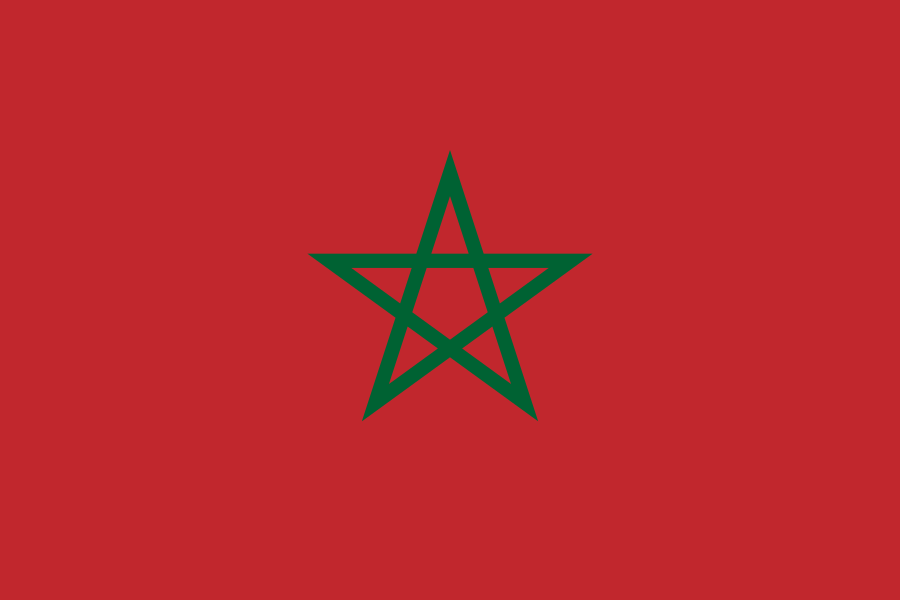
the flag of morocco


The national flag of Morocco is red with a pentagram which is a green five-pointed star symbolizing the five pillars of Islam.

The red background symbolizes the descendants of Muhammad and the star is green as this is the traditional color of Islam.


The star is the symbol of life, health and knowledge.

Culture


Morocco is an ethnically diverse country with a rich culture and civilization. Through Moroccan history, it has hosted many people coming from East , South  and North .
 All those civilizations have had an impact on the social structure of Morocco. It conceived various forms of beliefs, from paganism, Judaism, and Christianity to Islam.
Since independence, a veritable blossoming has taken place in painting and sculpture, popular music, amateur theatre, and filmmaking. The Moroccan National Theatre (founded 1956) offers regular productions of Moroccan and French dramatic works. Art and music festivals take place throughout the country during the summer months, among them the World Sacred Music Festival..
Each region possesses its own specificities, thus contributing to the national culture and to the legacy of civilization. Morocco has set among its top priorities the protection of its diverse legacy and the preservation of its cultural heritage.
Culturally speaking, Morocco has always been successful in combining its Berber, Jewish and Arabic cultural heritage with external influences such as the French and the Spanish and, during the last decades, the Anglo-American lifestyles.


the feast

date feastarabian name 
1 de Muharramfirst day of the year Fatih muharram
10 de MuharramAshuraAshura
12 de Rabi‘ al-Awalfeast of born of prophetAid al-Mawlid
26 de Ramadánnight of destinyLailat al-Qadr
1/2 de Shawalthe little party  (fin de Ramadán)Aid al-Fitr
10/11 de Du-l-Hiyyafeast of sacrifice Aid al-Adha


the colors in the festivals are very important 

for example 
the blue in the night of destiny represents the birth of the moon, wing mix of red and yellow happiness and change. 
Finally the white represents the next destination for next year which is mercy and salvation

Tourism

Tourism is one of the most important sectors in Moroccan economy, it is well developed with a strong tourist industry focused on the country's coast, culture, and history . Morocco attracted more than 10 million tourists in 2013.
this is increasingly focused on Morocco's culture, such as its ancient cities.
For example the modern tourist industry capitalizes on Morocco's ancient Roman and Islamic sites, and on its landscape and cultural history. 60% of Morocco's tourists visit for its culture and heritage. Agadir is a major coastal resort and has a third of all Moroccan bed nights. It is a base for tours to the Atlas Mountains. 
Other resorts in north Morocco are also very popular. Casablanca is the major cruise port in Morocco, and has the best developed market for tourists in Morocco, Marrakech in central Morocco is a popular tourist destination, but is more popular among tourists for one- and two-day excursions that provide a taste of Morocco's history and culture. The Majorelle botanical garden in Marrakech is a popular tourist attraction. It was bought by the fashion designer Yves Saint-Laurent and Pierre Bergé in 1980. Their presence in the city helped to boost the city's profile as a tourist destination.

Cuicine

Moroccan cuisine has long been considered as one of the most diversified cuisines in the world . 


This is a result of the centuries-long interaction of Morocco with the outside world. The cuisine of Morocco is mainly Berber-Moorish, European, Mediterranean cuisines. 

The cuisine of Morocco is essentially Berber cuisine (sometimes referred to as the Moorish cuisine). It is also Influenced by Sephardic cuisine and by the Moriscos when they took refuge in Morocco after the Spanish Reconquista


Spices are used extensively in Moroccan food. While spices have been imported to Morocco for thousands of years, many ingredients such as saffron from Tiliouine, mint and olives from Meknes, and oranges and lemons from Fez, are home-grown. Chicken is the most widely eaten meat in Morocco. The most commonly eaten red meat in Morocco is beeflamb is preferred but is relatively expensive. The main Moroccan dish most people are familiar with is couscous, the old national delicacy. Beef is the most commonly eaten red meat in Morocco,usually eaten in a Tagine with vegetables or legumes. 

Chicken is also very commonly used in Tagines, knowing that one of the most famous tagine is the Tagine of Chicken, potatoes and olives. Lamb is also consumed, but as North African sheep breeds store most of their fat in their tails,


Languages

Morocco's official languages are Arabic, French and Berber
The country's distinctive group of Moroccan Arabic dialects is referred to as Darija. Approximately 89.8% of the whole population can communicate to some degree in Moroccan Arabic. The Berber language is spoken in three dialects (Tarifit, Tashelhit and Central Atlas Tamazight) In 2008, Frédéric Deroche estimated that there were 12 million Berber speakers, making up about 40% of the population. The 2004 population census reported that 28.1% of the population spoke Berber.

Economy

Morocco's economy is considered a relatively liberal economy governed by the law of supply and demand. Since 1993, the country has followed a policy of privatization of certain economic sectors which used to be in the hands of the government.
 Morocco has become a major player in the African economic affairs
Morocco was ranked the 1st African country by the Economist Intelligence.

music


Morocco is perhaps the only Arab country that is characterized by such a large variety of music. Each region in Morocco has a unique music. It is the fundamental expression of popular culture. The traditional Moroccan music is an important part of everyday life, it is present in encuenta births, marriages, funerals, religious gatherings and festivals. Moroccan music is mainly composed of four major genres and a wide variety: (most common) Berber music, chaabi music (Amazigh), Gnawa music (mixed Amazigh and African style) and finally, the Andalusian. Each band itself is made up of sub-groups, divided into "modern" and "traditional." 


The (most common) Moroccan music sung in Darija and Tamazight (Amazigh Arabic dialect). 
The music Amazigh (Berber) also divided into 3 groups according to the different regions: 

  •      Rif north-eastern Morocco: Reggada and aarfa 
  •      Morocco Tamazight Center: chaabi and Ahidous 
  •      Chleuhs (Souss) in southern Morocco: Ahidous 

The Arab-Andalusian music, is divided into sub-groups depending on the Andalusian cities of origin of refugees in the Spanish-Andalusian Morocco: Meknes, Fez, Rabat, Salé, Tangier, Tetouan, Oujda, Chefchaouen may be sung in colloquial Arabic worship or even sometimes in Spanish and Hebrew

meet new people

the  people in Morocco are very conservative because they know each other at festivals, rituals and the church. 
although the people are conservative the youngs Moroccan can chat and use internet but the women not much because the religion is  very hard with the rules.

myths and legends

myths and legends:

One of the most popular myths of the culture of Morocco is aisha Kandisha, she was a woman that was adam primeraa wife, before Eve and she wanted to have the same place as Adam but God did not let her and she became the first demon culture of Morocco.


It is known for comerce children and killing men seduce married after

food

Restaurans in morroco:

one of the best restaurants in Morocco is Le Nil Bleu.
They are famous for their food and service admosfera.

it is in Front de MerAgadirMorocco 


Hours:
Sun - Thu 9:00 - 1:00
Fri - Sat 9:00 - 2:00
Good for: Child-friendly, Romantic, Local cuisine
this restaurant you can dining Breakfast/Brunch, Lunch Spot, Dinner, Reservations, After-hours, Dessert


in this place is tipal see one men dancing in the center of restaurant


The specialty here is seafood, moreover spices and meat.